
A good survival kit is not about expecting disaster. It turns a bad evening into a manageable one. A twisted ankle on a Margalla trail or a jeep stuck behind a landslide on the Karakoram Highway can happen to careful people. The difference between a story you laugh about later and a real emergency is usually a few small items packed before you left home.
This guide explains the "rule of threes" that survival instructors use to set priorities, then walks through what to pack for hunting, hiking and camping in Pakistan: fire starters, a whistle and compass, a knife or multi-tool, a reliable light, water and warmth, and a sensible first aid kit for hiking. We also cover a vehicle emergency kit for the northern areas, leaving a route plan with someone at home, and keeping your phone alive.
In This Guide
- The rule of threes and how it sets your priorities
- The six core categories of survival gear in Pakistan
- Choosing a fire starter, knife, multi-tool and light
- A first aid kit for hiking, and when to seek medical help
- A vehicle emergency kit for northern-area trips
- Route plans, phones and power banks
- A step-by-step packing checklist and FAQs
The Rule of Threes: Survival Kit Priorities
Survival trainers use a rough rule of thumb to remind people what matters first. It is not an exact medical limit for every person, but it is a useful way to think:
- 3 minutes without air, or with severe bleeding, is critical.
- 3 hours exposed to harsh weather, especially cold, wet and wind, can become dangerous.
- 3 days without water seriously weakens most people, and far sooner in Pakistan's summer heat.
- 3 weeks without food is survivable for many healthy adults, which is why food is a low priority in a small kit.
Most people pack snacks first and forget a warm layer or a way to signal. A well-built emergency kit flips that around: first aid and protection from the weather come first, then water, then fire, then the tools that help you get found or find your own way out.
Survival Gear in Pakistan: The Six Core Categories
From the Thar desert to the passes of Gilgit-Baltistan, your kit changes with the trip, but these six categories stay the same.
1. Shelter and Warmth
In the mountains, temperatures drop sharply after sunset even in summer. A foil emergency blanket folds to the size of a wallet and reflects body heat back to you, and a heavy-duty bin bag doubles as a poncho or ground sheet. Add a warm hat and spare socks in a plastic bag. Against sun, dust and cold wind, the Olight Bandana Multipurpose Scarf works as a face scarf, headband or balaclava. Clothing is your first shelter, so see our hunting clothing and layering guide as well.
2. Water
Carry more water than you think you need, especially on summer hunts and desert trips. A belt canteen like the Outdoor Military Survival Water Bottle, with its felt-lined cover and belt clips, keeps water on your body even if you drop your pack. Clear mountain streams can still carry germs, so pack purification tablets, a portable filter, or a metal pot for boiling, and follow the instructions supplied with any tablets or filter.
3. Fire Starter Options
Fire gives warmth, boils water, dries clothes and works as a signal. Carry at least two ways to light one, in different pockets.
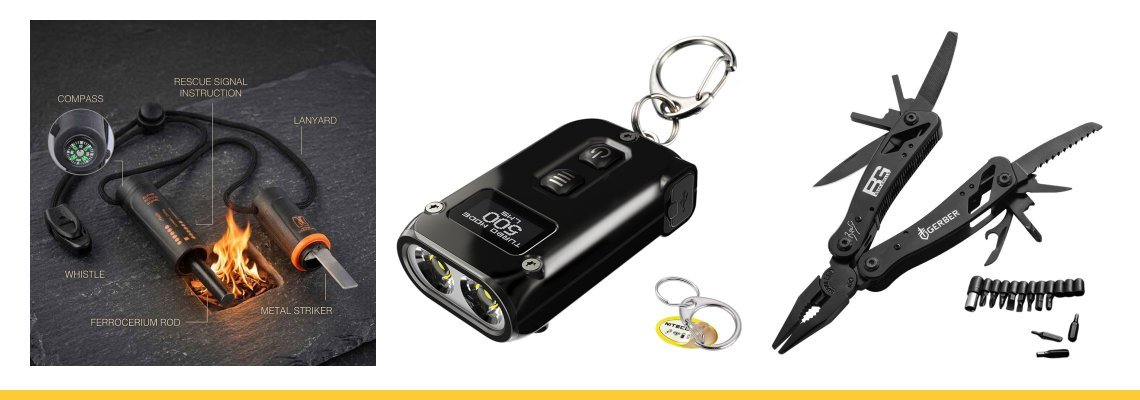
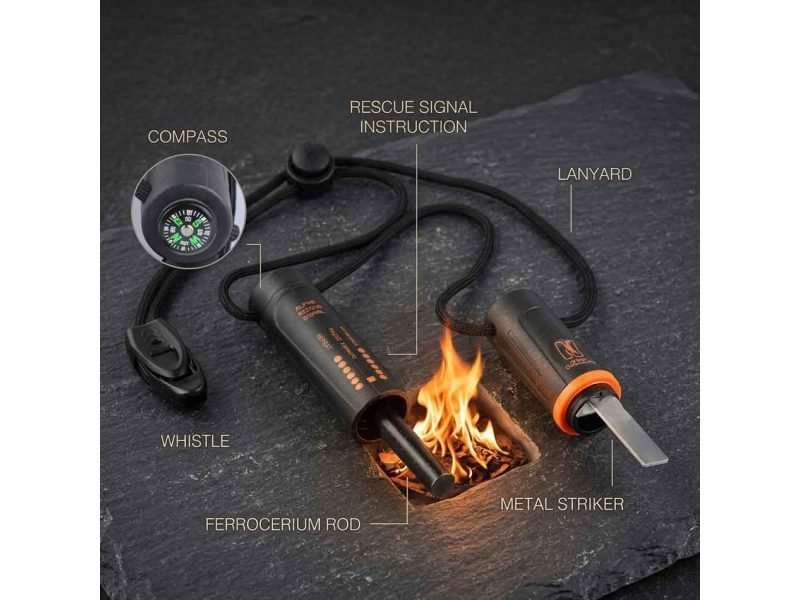
- The Survival Fire Starter Flint with Compass combines a magnesium flint rod, a steel striker with straight and serrated edges, a built-in compass and a rescue whistle on a neck cord, so it stays with you.
- The Portable Bottle-Shaped Flint Fire Starter is a small flint-based starter designed to work without oil or gas, ideal as a pocket backup.
- The Portable Metal Flint Match Lighter is a stainless steel "permanent match" of about 16 g. Despite the name, its description says it needs a little petrol or kerosene added before use.
Add a gas lighter and matches in a waterproof bag. Tinder matters as much as the spark: cotton wool, paper or dry grass in a small bag catches sparks easily. Practise at home before you need it in the cold, only light fires where it is safe and allowed, and put them out completely before leaving.
4. Signalling
If you are lost or injured, the goal is to be found quickly. A whistle carries much further than your voice and uses less energy; three short blasts is widely understood as a call for help. A torch, a mirror or a phone screen can signal at night or across a valley.
5. Navigation
Phones are excellent for navigation until the battery dies or the signal drops. Download offline maps before you leave and carry a basic compass, such as the one on the survival flint above, and practise using it on familiar ground. Note landmarks and turn around before dark.
6. First Aid
The category most people under-pack; see the dedicated section below.
Knife, Multi-Tool and Light: Choosing Your Emergency Kit Tools
Knives
For most people a folding knife with a 7 to 9 cm blade handles cord, tinder, packaging and camp tasks. The Buck Mini X61 has a 7 cm 440C stainless steel blade with a liner lock and weighs about 100 g. The Browning Wood Handle Folding Knife steps up to an 8.5 cm 440C blade at about 210 g. Browse the full Knives and Tools range.

Multi-Tools
A multi-tool earns its place when something breaks: a backpack buckle, a tent pole, a stove fitting or a loose screw. The Gerber 11 in 1 Multifunctional Tool includes needle-nose pliers, a wire cutter, a knife, a saw, a file and screwdrivers, with a nylon belt sheath.
Lights
Do not rely on your phone's torch; a dedicated light saves the phone battery for calls. The Nitecore TINI2 SS keychain flashlight weighs 26 g, gives up to 500 lumens and shows remaining runtime on a small display. For cars and camp, the Nitecore NWL20 work light has a magnetic base, an adjustable head and a red flashing warning mode. Our flashlight buying guide explains lumens and batteries, or browse camping lights.

Quick Comparison: Core Items
| Item | Main job | Example at Just Hunters | Packing tip |
|---|---|---|---|
| Flint fire starter | Fire without gas or matches | Survival Fire Starter Flint with Compass | Wear on a neck cord with dry tinder |
| Backup lighter | Quick flame | Portable Metal Flint Match Lighter | Keep in a different pocket |
| Whistle | Signalling for help | Whistle on the survival flint | Three short blasts means help |
| Folding knife | Cutting and camp jobs | Buck Mini X61 (7 cm blade, 100 g) | Pocket, not deep in the pack |
| Multi-tool | Repairs | Gerber 11 in 1 Multifunctional Tool | Belt sheath for quick access |
| Small torch | Light and night signalling | Nitecore TINI2 SS (500 lumens, 26 g) | Charge fully before leaving |
| Water container | Hydration | Outdoor Military Survival Water Bottle | Pair with purification tablets |
First Aid Kit for Hiking: What to Pack
A first aid kit for hiking should handle the common problems: cuts, blisters, sprains, headaches, stomach upsets and minor burns. Buy a ready-made kit from a pharmacy or build one in a waterproof pouch:
- Plasters in several sizes, plus blister plasters
- Sterile gauze pads, an elastic bandage and medical tape
- Antiseptic wipes, disposable gloves, small scissors and tweezers
- A triangular bandage for use as a sling
- Oral rehydration salts (ORS), very useful in the heat
- Basic pain relief and your personal medicines, with a few extra days' supply
- A card with your blood group, allergies, conditions and an emergency contact
Check the kit every season, replace anything used or expired, and make sure everyone in the group knows where it is. A basic first aid course is well worth taking.
Basic First Aid Principles
This is not medical training, but a few principles almost always apply. Make sure the scene is safe for you first. Call for help early. Apply firm, direct pressure to a bleeding wound with a clean pad. Keep an injured person warm, calm and still. Do not move someone who may have a head, neck or back injury unless they are in immediate danger, and give nothing by mouth to anyone drowsy or unconscious.
When to Seek Medical Help
Get professional help quickly for bleeding that will not stop, a suspected broken bone, a head injury followed by confusion or vomiting, chest pain or difficulty breathing, a severe allergic reaction, any snake or dog bite, larger burns, signs of heatstroke, confusion in the cold, or a severe headache and breathlessness at altitude. At altitude, worsening symptoms usually mean descending with company. Call Rescue 1122 where it operates, or your nearest emergency service.
Responsible-use note: hunting in Pakistan is regulated by provincial wildlife departments, which set licences, open seasons, bag limits and protected species. Check the current rules with your provincial wildlife department before any trip, and handle knives, fire and firearms with care.
Vehicle Emergency Kit for Northern-Area Trips
Drives to Naran, Babusar, Hunza, Skardu, Swat or Neelum are spectacular, but landslides, snow, flooding and long stretches without fuel or signal are real risks. Check weather and road conditions with local authorities before leaving and again before each high pass, and be ready to wait for a road to reopen. Pack:
- Warmth: blankets or sleeping bags for everyone, hats, gloves and dry clothes, even in summer.
- Water and food: several litres of water and snacks such as dates, nuts and biscuits for at least an extra day.
- Light and safety: a work light, a warning triangle, a reflective jacket, and the Swiss+Tech 7-in-1 Bodyguard Auto Emergency Escape Tool, which combines a glass breaker, seat belt cutter, tyre pressure gauge and LED light on a key fob.
- Vehicle items: a good spare tyre, jack, tow rope, jumper cables, a small shovel and snow chains where needed.
- Tools and first aid: a multi-tool, the first aid kit and personal medicines.
Fill up with fuel whenever you can. If you are stuck in snow, keep the exhaust clear before running the engine for heat, and open a window slightly. Stay well back from landslide slopes, as more rock can follow, and never drive into a flooded road or nullah.

Tell Someone Your Route and Keep Your Phone Alive
The most powerful safety tool costs nothing: a trusted person who knows where you are going. Before every trip, send them your route and alternatives, the names and numbers of your group, your vehicle details, where you will park or camp, and the time after which they should raise the alarm. Message them when you are back.
Coverage in the mountains and deserts is patchy. Keep your phone in an inside pocket in the cold, use battery saver, and switch to airplane mode when there is no signal so it stops searching. Always carry a charged power bank and cable. In camp or the car, the Coleman 4D CPX 6 Portable Energy Pack runs on four D batteries (not included) and has a USB output, so it can charge a phone from ordinary batteries when there is no electricity.
How to Pack Your Survival Kit
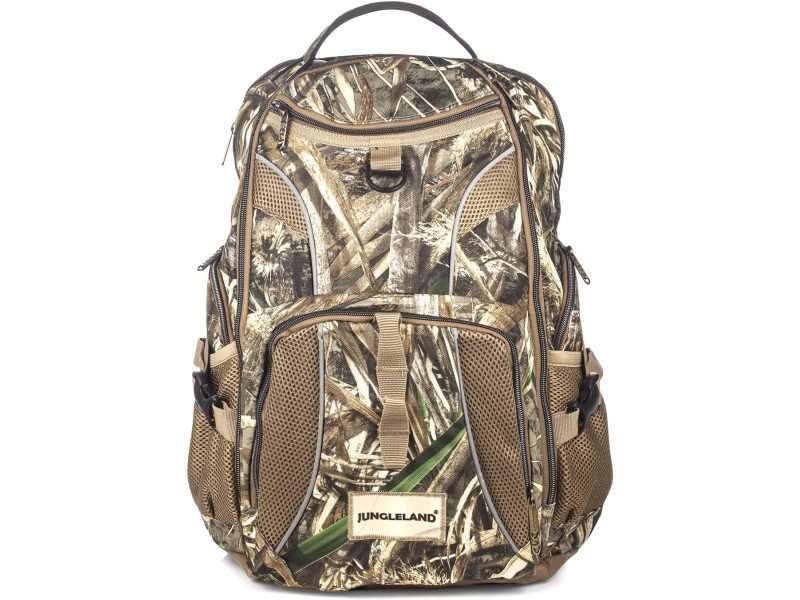
A compact kit should fit in a small pouch inside your daypack or hunting bag, with a few items carried on your body. The water-resistant 600D nylon Jungleland Camo Backpack has plenty of pockets to keep things organised. See more in Backpacks and Bags and the Safety and Survival section.
Step-by-Step Packing Checklist
- On your body: knife or multi-tool, small torch, phone, and a fire starter with whistle on a neck cord.
- In a waterproof pouch: a second fire starter or lighter, matches, tinder, compass, emergency blanket and a few metres of paracord.
- Water: a full bottle plus purification tablets or a filter.
- First aid kit with personal medicines and your medical info card.
- Warm layer, hat and spare socks; a bin bag for rain.
- Charged power bank, cable and offline maps.
- High-energy snacks for a few extra hours.
- Route plan sent to a trusted person.
- Final check: batteries charged, lighters working, nothing expired.
- For road trips: vehicle kit packed, tank full, road conditions checked.
Many customers visit the Just Hunters shop in Gulberg, Lahore, to handle knives, lights and fire starters before a big trip; you can also order online with cash on delivery across Pakistan. For trip planning, read our guide to hunting in Pakistan, and browse the camping range for stoves and cookware.
Frequently Asked Questions
What should be in a basic survival kit for hiking in Pakistan?
A basic survival kit should cover first aid, shelter, water, fire, signalling and navigation. In practice that means a first aid pouch, an emergency blanket, a full water bottle with purification tablets, two ways to make fire, a whistle, a compass, a knife or multi-tool, a small torch and a charged power bank. Add a warm layer, snacks and a route plan left with someone at home.
Which fire starter is best for an emergency kit?
A flint or ferro rod style fire starter is the most dependable backup because it does not rely on gas or fuel and can still throw sparks after being wiped dry. Carry it with dry tinder such as cotton wool. Keep a gas lighter or matches as your quick first option, stored separately. Practise at home first, and only light fires where it is safe and permitted.
What do I need in a first aid kit for hiking?
A first aid kit for hiking should include plasters and blister plasters, sterile gauze, an elastic bandage, tape, antiseptic wipes, gloves, scissors, tweezers, a triangular bandage, oral rehydration salts, basic pain relief and your personal medicines. Add an emergency blanket and a card listing your blood group, allergies and an emergency contact. Check and restock it before every season.
How do I prepare my car for a trip to the northern areas?
Service the vehicle, check the tyres and spare, and fill up with fuel whenever possible. Pack blankets, warm clothes, extra water and food for at least an extra day, a first aid kit, a work light, a tow rope, jumper cables, a small shovel and snow chains where needed. Check road and weather conditions before leaving, and tell someone your route and expected arrival time.
How can I keep my phone charged on a long trek?
Carry a fully charged power bank and the right cable, and download offline maps before you lose signal. Keep the phone warm in an inside pocket, because cold drains batteries quickly. Use battery saver, lower the screen brightness, close unused apps and switch to airplane mode when there is no network. A separate small torch saves your phone battery for calls and navigation.
Where can I buy survival gear in Pakistan?
Just Hunters stocks fire starters, knives, multi-tools, flashlights, water bottles and backpacks in its Safety and Survival, Knives and Tools and Camping sections. You can visit the shop in Gulberg, Lahore, to see items in person, or order online with cash on delivery available across Pakistan. First aid supplies and medicines are best bought from a pharmacy.
Conclusion
A survival kit does not need to be large or expensive. Follow the rule of threes, cover shelter, water, fire, signalling, navigation and first aid, pack a proper first aid kit for hiking, and add a vehicle emergency kit when you head north. Above all, tell someone your route and carry your kit every time. Prepared people rarely need heroics; they simply get home safely and plan the next trip.