

A slingshot, or catapult as many of us called it growing up, is one of the simplest and most satisfying ways to start target shooting. Ammo is affordable and the gear fits in a pocket. But a modern slingshot is far more refined than the forked stick of our childhood, and the right frame, bands and ammo make a big difference to accuracy and safety. This guide covers what a new shooter in Pakistan needs to know, from frame materials to anchor points.
In this guide
- Slingshot frame types: resin, metal and wood
- Flat bands vs tubes, and how band size affects draw weight and speed
- Choosing ammo: 6.35mm steel balls and mud balls
- Aiming aids: lasers, spirit levels and sights
- How to hold, draw, aim and release consistently
- Setting up a safe target area and catch box
- Eye protection, band care and replacing bands
- A practice plan, a beginner's checklist and FAQs
Slingshot Frame Types and Materials
The frame is the handle and fork that holds the bands. For target shooting it should feel secure in your hand, give the ammo a clear path between the forks, and be strong enough to handle band tension without flexing. There are three main material families.
Resin and polymer frames
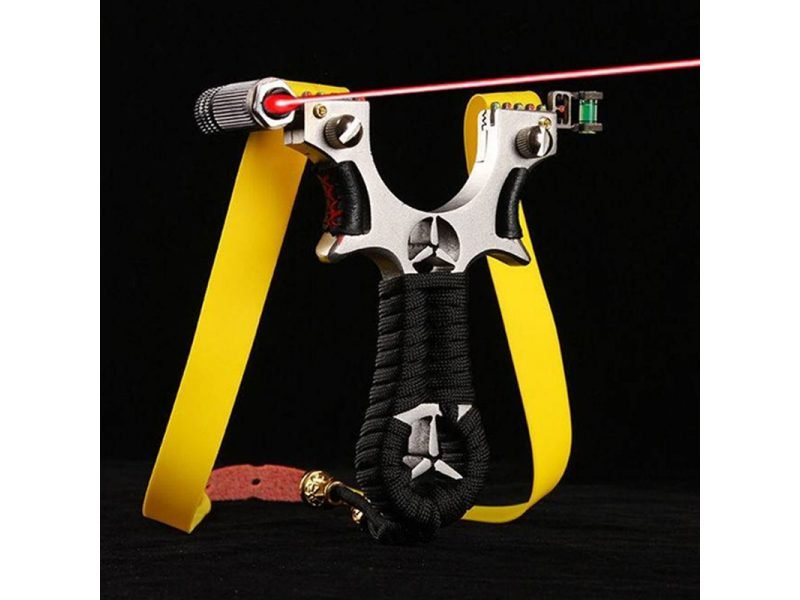
Resin frames are light, comfortable and affordable, the most popular choice for beginners, and many have aiming aids built in. The black resin slingshot with laser and flat rubber bands is a good example: a 125mm resin body, a non-slip rubber grip and a laser on the frame to help you line up shots. For new shooters who struggle to keep the frame upright, the red and blue resin laser slingshot with spirit level adds a level on the sight so you can learn to hold the frame balanced.
If you want the most aiming help in one frame, the Double Spiral fast compression slingshot is made from polycarbon resin and combines a red laser collimator with five guide pins, a luminous light, a level for posture correction and a spring-assisted system for tool-free band fitting.
Alloy and stainless steel frames
Metal frames are heavier, which many shooters like because the extra weight steadies the hand during the draw. They are also very durable. The powerful alloy slingshot with magnet in the base weighs 150g, has a woven cord wrap on the handle for grip, and a magnet in the base that holds spare steel balls for quick reloading. Its fork head is 8.4cm wide outside and 4.4cm inside.
Stepping up, stainless steel frames resist rust and suit shooters who want something that lasts. The heavy-duty stainless steel spider slingshot weighs 300g, has spirit level sights, a 5M to 50M scale on the fork head and a pressure plate for changing bands without extra tools. The Cat Eye 304 stainless steel catapult with G10 grips is lighter at about 223g, with a 43mm inside fork width and G10 grip panels for a secure hold. The compact stainless steel metal slingshot with adjustable aiming points has a detachable mechanical aiming system and comes with rubber bands included.
Wooden frames
Wood is the traditional material, and many experienced shooters still prefer its warm, natural feel. A good wooden frame should be made from strong layered material rather than soft timber that can split. The handmade wooden OTT catapult is cut from high-grade ply wood with an oil finish for water resistance and comes fitted with double Theraband Gold elastic. Because each one is handmade, the grain varies from piece to piece.
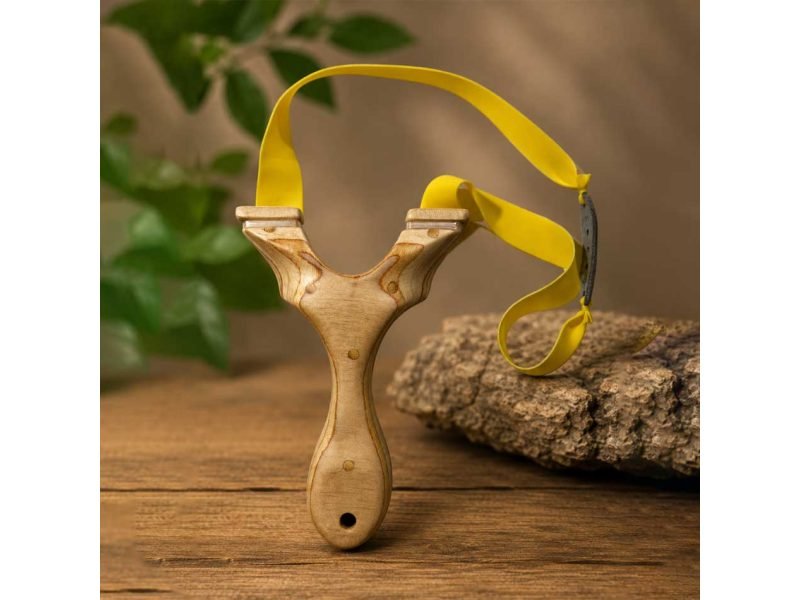
OTT (over-the-top), seen in many listings, means the bands wrap over the fork tips. Whatever style you pick, stick with it while learning.
Frame comparison at a glance
| Frame material | Strengths | Things to consider | Example at Just Hunters |
|---|---|---|---|
| Resin / polymer | Light, comfortable, often has laser and level aids | Less weight to steady the hand | Laser slingshot with spirit level (130mm) |
| Alloy | Durable, solid feel, magnet for spare balls on some models | Heavier than resin | Alloy slingshot (150g) |
| Stainless steel | Rust resistant, very strong, tool-free band plates on some models | Heaviest option; takes time to get used to | Spider stainless slingshot (300g) |
| Wood (ply) | Traditional feel, warm grip | Keep it dry; check for cracks | Wooden OTT catapult |
Bands: Flat Bands vs Tubes
The bands are the engine of a slingshot. They store energy as you draw and release it into the ammo. There are two main types.
- Flat bands are strips of latex. They are generally faster and smoother for the same draw effort, which is why most modern target frames, including the resin laser models above, use them. The trade-off is that they wear out sooner and need replacing more often.
- Tubes are round latex tubing. They are usually more durable and forgiving, but they often feel heavier to draw and are typically a little slower than a comparable flat band.
How thickness and width affect draw weight and speed
As a general rule, thicker or wider bands are harder to pull and suit heavier ammo, while thinner or narrower bands are easier to draw and suit lighter ammo. Many shooters use tapered bands (wider at the fork, narrower at the pouch), which tends to make the shot snappier for the same effort.
For a beginner, more power is not better. A band that is too heavy makes your hand shake and ruins your anchor. Choose a light to medium band you can draw smoothly to the same point 50 times in a session. Bands that are too short for your draw are overstretched and break early.
Choosing the Right Ammo
Avoid random stones and glass marbles. Irregular ammo flies unpredictably, is more likely to hit the fork, and is more likely to bounce back at you. Uniform, round ammo is the single biggest upgrade most beginners can make.
6.35mm steel balls
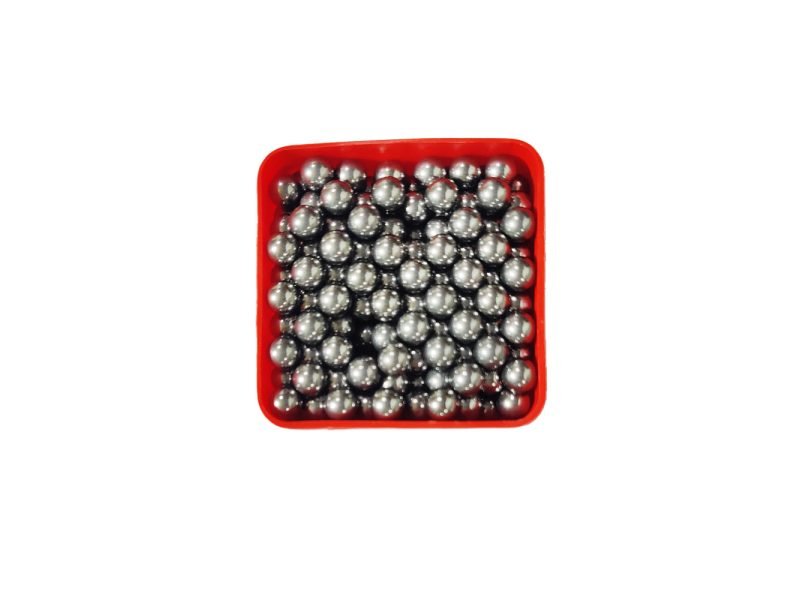
Our best-selling 6.35mm steel BBs for slingshots (pack of 144) are .25 calibre steel balls of uniform size, so every shot behaves the same way and you can actually see what your technique is doing. They are a popular size for target practice and plinking with light to medium bands. Before you buy, check that your slingshot's pouch suits 6.35mm ammunition.
Larger steel balls such as 8mm are heavier, need stronger bands and carry more energy, so they demand a more solid backstop. Start small and move up once your technique is ready.
Mud or clay balls
Several of our resin frames, including the black laser slingshot, are listed as shooting both steel balls and mud balls. Hardened mud balls are lighter and less likely to rebound, a sensible option for early sessions, though less uniform than steel.
Aiming Aids: Lasers, Levels and Sights
Traditional slingshot shooting is "instinctive", with no sights. Many modern frames add aids that help beginners learn faster:
- Laser: shows where the frame is pointing, not exactly where the ball will land at every distance. Treat it as a training aid. Never shine a laser into anyone's eyes.
- Spirit level: helps you keep the frame upright. Tilting the frame is a common cause of left-right misses.
- Guide pins and sights: the Double Spiral's five guide pins and the metal slingshot's adjustable aiming points give you reference points for different distances.
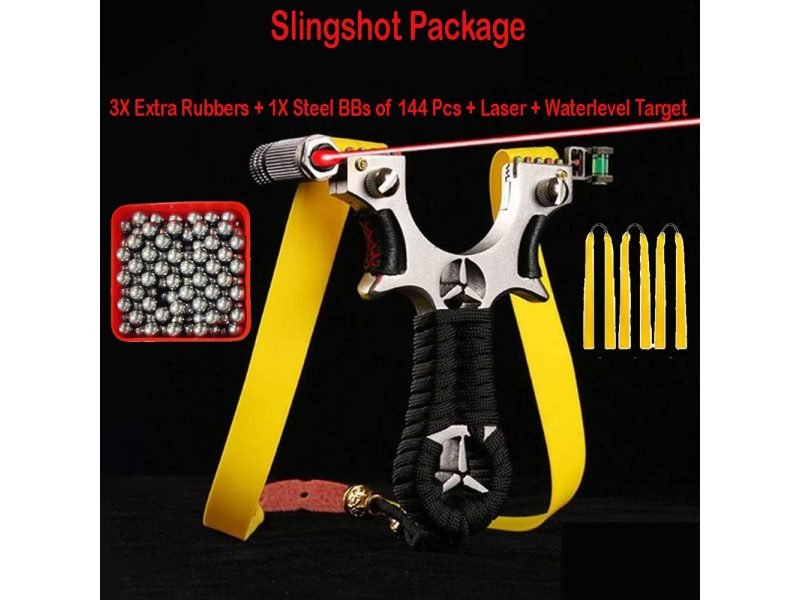
For a first purchase, the laser slingshot kit with 3 extra rubber bands and a box of steel BBs includes the resin laser slingshot, three spare bands and ammo in one package.
How to Hold, Draw, Aim and Release
Good technique means doing the same thing every single time. Follow these steps:
- Grip: hold the frame firmly but not tightly, wrist straight.
- Load: centre one ball in the pouch and pinch it between thumb and index finger.
- Stance: stand side-on to the target, feet shoulder-width apart.
- Draw: push the frame forward with your arm almost straight and pull the pouch back smoothly in one motion. Do not hold at full draw for long.
- Anchor: bring your drawing hand to the same point on your face every time, such as the corner of your mouth or your cheekbone. This is the key to consistent shots.
- Aim: focus on the target, use your reference (fork top, guide pin or laser) and keep the frame level.
- Release: simply relax your fingers. Do not jerk or twist the frame hand.
- Follow through: hold your position for a second and watch the shot land.
Tip: never draw beyond what the band length allows. Overdrawing is a common cause of band breaks, and a snapping band travels straight back towards your face.
Setting Up a Safe Target Area
A steel ball from a slingshot can break glass, dent a car and cause serious injury. Safety is not optional. Before your first shot, sort out the following.
Build a catch box
A catch box is a sturdy box (a strong wooden crate works) with two layers of heavy cloth, such as an old blanket or canvas, hanging loosely inside behind the target. The cloth absorbs the ball's energy so it drops into the box instead of bouncing, and you can reuse your steel balls.
Choose a safe backstop and direction
- Behind the catch box, have a solid backstop such as a thick wall with nothing breakable nearby, or a raised earth bank.
- Never shoot towards windows, cars, roads, rooftops, neighbouring houses or where people walk.
- Avoid hard surfaces like concrete, metal sheets or brick directly in the line of fire; balls can rebound straight back.
- Check what is behind and beyond the target before every session.
Distance
Start at about 5 metres. Once you can hit a 10cm target regularly, move back to around 8 to 10 metres, a common practice distance for target shooters. Do not rush distance; it hides bad habits.
Golden safety rules
- Never aim at people, animals, birds or property, even as a joke.
- Children must always be supervised by an adult.
- Keep spectators behind the shooter.
Protective Eyewear: Non-Negotiable
Bands can snap and ammo can rebound or hit the fork. Wear proper impact-rated shooting glasses every time you shoot, and make sure anyone nearby wears them too. Ordinary sunglasses and prescription glasses are not designed for impact. Our shooting accessories range is a good place to look for eye protection and other range gear.
Band Care and Replacing Bands
Latex bands are consumables. With care they last longer, but they always need replacing eventually.
- Inspect before every session: look for nicks, cuts, whitening or thinning near the pouch and fork. If you see damage, replace the band before shooting.
- Store away from sun and heat: UV light and summer heat break down latex quickly. Never leave a slingshot on a car dashboard.
- Do not dry-fire: releasing an empty pouch shocks and damages the bands.
- Use easy-change frames: the pressure plates on the stainless spider slingshot and compact metal slingshot make swapping bands simple.
- Fit evenly: both sides must be the same length, or shots will drift.
Practising for Accuracy
Short, focused sessions beat long, tired ones. Try this simple plan:
- Week 1: 30 to 50 shots per session at 5 metres on a large target such as a paper plate. Focus only on the same anchor point and a clean release.
- Week 2: shrink the target to a drinks can or a 10cm circle and count hits out of 10.
- Week 3 onward: move to 8 to 10 metres and write down your scores so you can see progress.
Hanging cans or bottle caps on string give instant feedback. Shots scattering left and right usually mean a tilted frame; high and low misses point to your anchor or draw length. Stop when your arm tires. If you later move into airguns, the same discipline applies; see our guide to the best airguns for target shooting in Pakistan.
Beginner's Slingshot Checklist
- A comfortable frame with light to medium bands
- Uniform ammo, such as 6.35mm steel balls or mud balls
- Impact-rated shooting glasses for you and anyone nearby
- A catch box with a cloth curtain and a solid backstop
- A clear shooting direction with no people, animals, windows or vehicles
- Spare bands and a habit of checking them before every session
- Targets: paper plates, cans or bottle caps on string
- Adult supervision for any young shooters
You can browse every frame in the Just Hunters slingshots collection and find more outdoor gear in our hunting accessories section.
Frequently Asked Questions
Which slingshot is best for a complete beginner?
A light resin frame with flat bands and an aiming aid is the easiest to learn on. The red and blue laser slingshot with a spirit level was designed with beginners in mind, while the laser kit gives you spare bands and steel BBs in one package.
What size steel balls should I use?
6.35mm steel balls are a common, practical size for target practice with light to medium bands. Always check that your pouch suits the ammo size, and only move to heavier ammo once you have stronger bands and a backstop to match.
How often should I replace bands?
There is no fixed number, as it depends on the band, your draw length and how you store it. Inspect bands before every session and replace them at the first sign of nicks, tears or thinning.
Is a slingshot safe for children?
Only under direct adult supervision, with eye protection, a proper catch box and clear rules never to aim at people, animals or property. Light bands and mud balls are a sensible starting point.
Can I practise in my backyard?
Yes, if you can shoot away from windows, cars, neighbours and walkways into a catch box with a solid backstop. Otherwise, use open ground.
Does a laser make me more accurate?
It helps you check frame alignment and build a consistent aim, but accuracy still depends on your anchor, draw and release. Use it as a training aid and never point it at anyone's eyes.
Final Thoughts
Slingshot target shooting rewards patience. A comfortable frame, sensible bands, uniform ammo, the same anchor every time and a safe setup will take you further than any amount of power. Just Hunters stocks resin, metal and wooden slingshots along with 6.35mm steel BBs. Visit our shop in Gulberg, Lahore, to try frames in hand, or order online with cash on delivery anywhere in Pakistan. Shoot safe and enjoy the progress.