
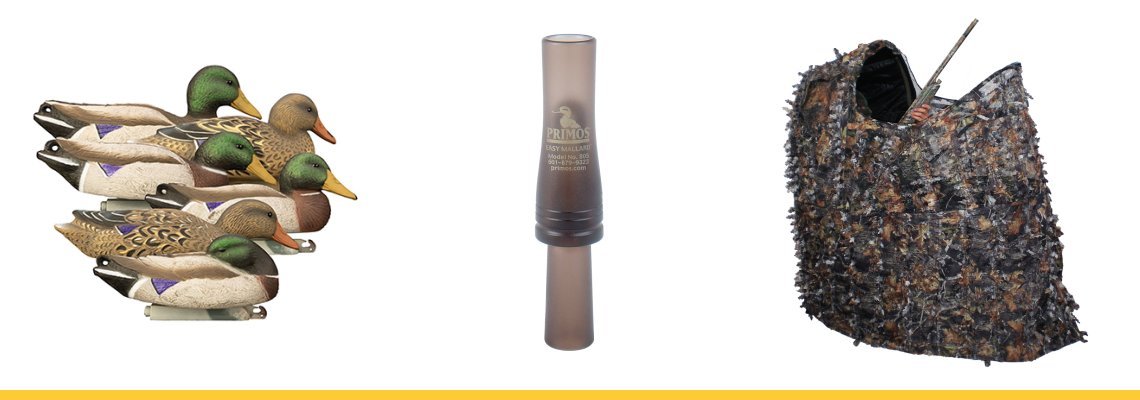
Winter brings ducks down from the north to Pakistan's jheels, barrage ponds, canals and flooded fields. A good morning on the water comes from scouting, setting up in the dark, staying hidden and calling with restraint. This guide covers the duck hunting gear checklist we recommend for Pakistan's wetland season, and explains how to use each item in the field.
In this guide
- The law and ethics: licences, seasons, bag limits and protected areas
- Scouting and timing: dawn flights and reading the wind
- Decoys: types, spreads, numbers, keels, anchor lines and motion
- Manual duck calls and basic calling, including when to stay quiet
- Blinds and concealment
- Staying dry and warm
- Lights and optics for setting up before dawn
- Carrying and organising your gear
- Retrieving birds and cleaning up the site
- A printable checklist and FAQ
First Things First: Hunt Legally and Ethically
Hunting in Pakistan is regulated by the provincial wildlife departments, such as the Punjab Wildlife and Parks Department and its counterparts in Sindh, Khyber Pakhtunkhwa and Balochistan. Rules change, so check them every season. As a minimum:
- Carry a valid licence or permit. Keep your provincial hunting licence or permit on you, and make sure your firearm is licensed too.
- Hunt only in the open season and on permitted days. Hunting is often allowed only on certain days of the week. Confirm the current dates and days.
- Respect bag limits. Count your birds and stop at the daily limit.
- Know the protected species. Some waterfowl and wetland birds are protected and must never be shot. If you can't identify a bird with confidence, don't shoot it.
- Never hunt in sanctuaries or protected wetlands. Sanctuaries, national parks, game reserves and protected wetlands are off limits. On private land, get permission first.
- Use manual calls only. Electronic callers are banned or restricted in many places and encourage over-harvesting.
Always confirm current season dates, permitted days, bag limits and fees with your provincial wildlife department. For an overview, see our post on the hunting season in Pakistan.
Scouting and Timing
Find where the ducks want to be
Your best decoys and calls won't fix a bad location. In the days before a hunt, watch the jheel or pond in the evening and early morning. Note where birds land, rest and feed. Shallow, weedy margins and flooded stubble hold feeding mallard, teal and shoveler; open water draws divers and coots.
Dawn flights
Ducks fly out to feed at first light. Plan to be fully set up and hidden at least 30 to 45 minutes before legal shooting light. Setting up in the dark always takes longer than you expect, and early birds will flare if they see you still splashing about.
Wind direction
Ducks land into the wind, just like aircraft. Check the forecast, then confirm it on site with a pinch of dust. Ideally, set up with the wind at your back or blowing across your position. Birds then approach over the decoys and land in the gap in front of you. With the wind in your face, birds come from behind you and offer poor shots.
Decoys: Types, Spreads and Setup
Decoys tell passing ducks that the spot is safe and has food. Browse our hunting decoys section once you know what kind of hunting you do.
Decoy types compared
| Type | Best for | Strengths | Trade-offs |
|---|---|---|---|
| Hard-body floating shells | Most water hunting | Realistic paint and carving, self-righting keels, durable | Bulkier and heavier to carry |
| Foam-filled floaters | Hunters shooting low over the spread | Keep floating even if hit by shot | Slightly heavier than hollow decoys |
| Inflatable / collapsible | Walk-in hunting, long carries | Pack small and light; more decoys per bag | Less rigid; handle carefully around thorns |
| Fold-up shotproof | Walk-in hunters who want tangle-free rigging | Fold flat, rigging stored inside, usable on land or water | Different look from a hard-body decoy |
| Full-body / stake-out | Dry fields and shorelines | Realistic on land | Bulky; not for open water |
| Motion decoys | Calm days, adding life to a spread | Movement and flash visible from far away | Rules vary; check before using motorised types |
For a traditional floating spread, the Higdon Standard Mallard duck decoys (6 pc) are the lightest and most packable decoys in the Higdon range. They have a forward-weighted keel, a front clip for short-stringing, and a mix of upright and resting drakes and hens. If you want decoys the size of a live mallard that stand up to low shots, the Higdon Full Size Mallard foam-filled decoys include upright, skimmer, resting and sleeping drakes plus two hens, which makes for a natural-looking group.
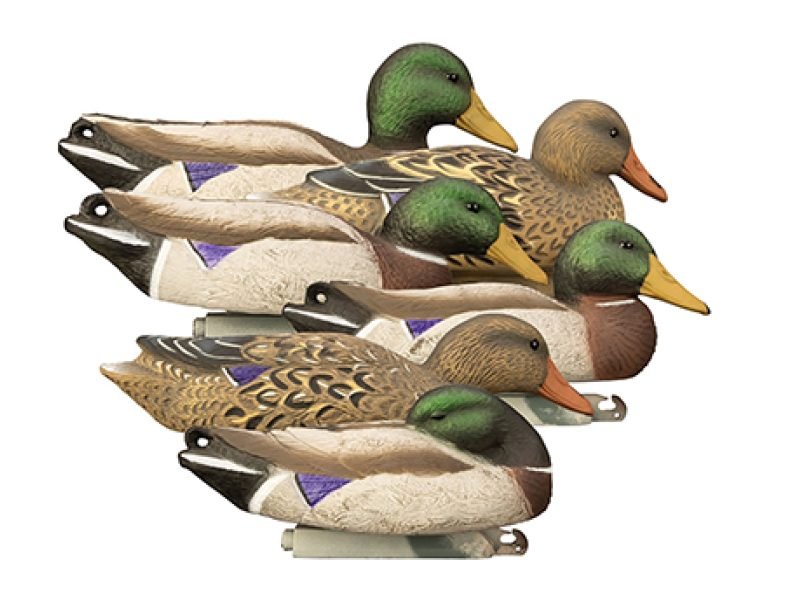
Walk-in hunters who cross long stretches of marsh should look at the inflatable collapsible mallard decoys and the inflatable green wing teal decoys. Both pack flat, so you can fit about twice as many decoys in one slotted bag, and both have a weighted keel with an anchor hook. Keel slots let you face decoys in different directions.
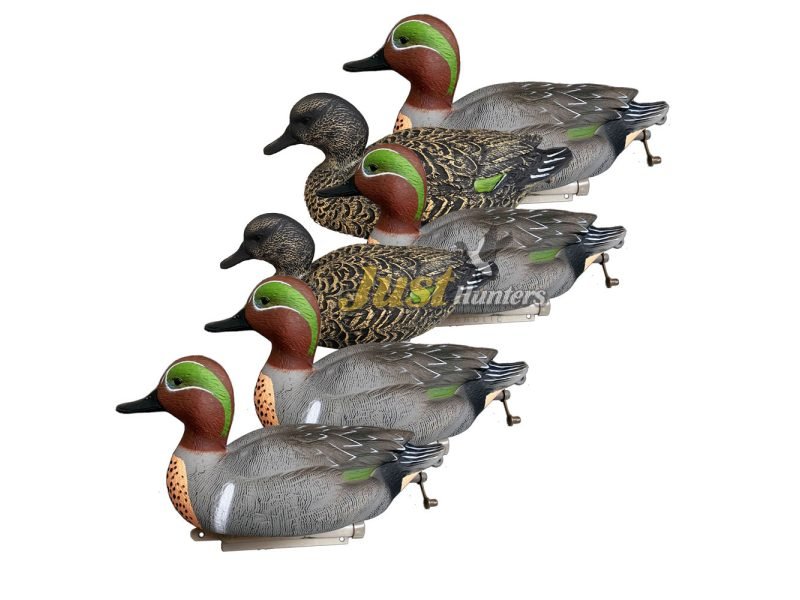
The FUD fold-up range is another option for long walks. The FUD pintail foldable shotproof decoys come as six decoys (three drakes, three hens) with matching anchors, anchor line and a belt carry hook. The rigging stores inside each decoy, so it doesn't tangle.
Mix species for confidence
Our wetlands hold mixed flocks, so mainly mallards with a few teal, pintail or shoveler looks natural. Coots make a useful "confidence" decoy because they raft up alongside many ducks. A few Higdon foam-filled coot decoys on the edge of your spread can reassure wary birds.
Spreads: J-hook and U-shape
- J-hook: A long tail of decoys running downwind, with a curl (the hook) near your hide. Birds follow the line and land in the pocket inside the hook. It works well in a crosswind and suits small to medium spreads.
- U-shape (or horseshoe): Two arms of decoys with an open centre facing downwind, and your hide at the closed end. Ducks drop into the open "U". It suits a wind at your back and larger spreads.
Whatever shape you use, leave a clear landing hole 20 to 30 metres from your hide, within comfortable shotgun range. Space decoys a few feet apart. Tight bunches signal alarm.
How many decoys?
There is no magic number. As a rough guide, 6 to 12 decoys are enough for small ponds, canal bends and walk-in spots. Use 18 to 36 on larger jheels and open water, where birds need to see you from a distance. Late in the season, a smaller, realistic setup often beats a huge one.
Keels and anchor lines
Weighted keels keep decoys upright and help them right themselves after a wave. For each decoy, tie an anchor line a little longer than the water depth (about one and a half times the depth), so the decoy can swing naturally without drifting away. In shallow water, short-string decoys using the keel clip. A spool of braided cord such as the Mossy Oak Whistling Wings decoy cord (500 ft braided nylon) is enough to re-rig a full spread and still have spare line.
Adding motion
On still mornings a spread can look lifeless. Motion makes it look real. A jerk string (a cord tied to a few decoys that you pull from the hide) creates ripples cheaply. The MOJO Outdoors Wind Duck is a spinning-wing mallard drake that runs on wind alone and turns in breezes as light as 5 mph, with no motor. Motorised spinning-wing decoys also exist, but the rules on using them differ, so check with your wildlife department first. Stop the motion when birds are close and committed.
Manual Duck Calls and Basic Calling
A good hand call helps turn passing birds toward your spread. Our manual duck calls section at Just Hunters covers mallard, teal, whistle and speciality calls.
Choosing your first calls
- A hen mallard call: The Primos Easy Mallard call (805) is a single-reed call with an ultra-thin .010 inch Mylar reed, which makes it very easy to blow, and it keeps working when wet.
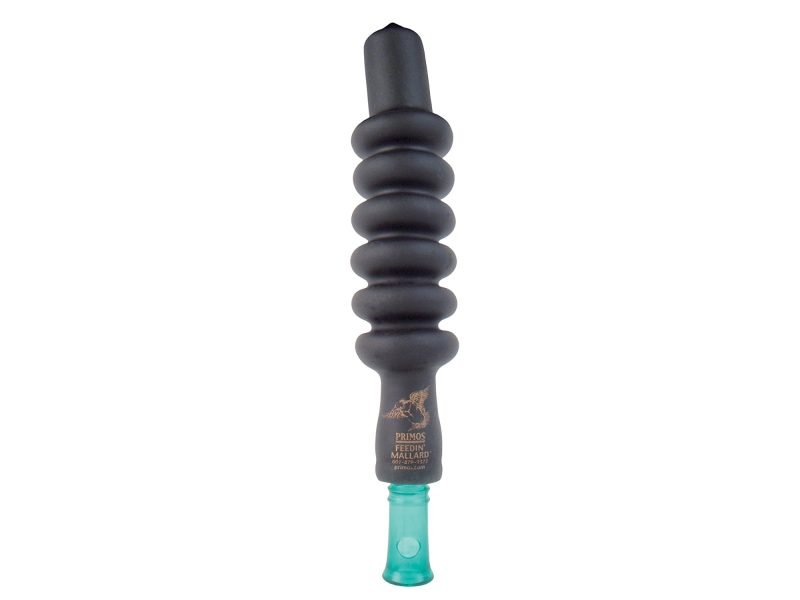
- A feeding call: The Primos Feeding Mallard call (829) is made for feed chatter, with a tuning hole in the bell that helps it sound like several ducks at once.
- A teal call: Teal are common on our wetlands. The Buck Gardner Teal duck call is tuned to the high-pitched quacks of a teal hen and is made of tough polycarbonate.
- A whistle: The Magnum Duck Whistle 4-in-1 covers pintail, wigeon, green-winged teal and mallard drake whistles in one tiny call.
Basic calls to learn
- The basic quack: A single, clean "quack" pushed from the diaphragm, not the cheeks. Practise until every note sounds the same.
- The greeting or hail call: A falling series of quacks to grab the attention of distant birds.
- The feeding chuckle: A fast, rolling "tikka-tikka-tuk" that tells birds other ducks are feeding happily.
When NOT to call
Over-calling scares off more ducks than it brings in. Stay quiet when:
- Birds are already coming straight to your spread with wings cupped.
- Ducks are directly overhead. They can pinpoint the sound and spot you looking up.
- Birds flare or change direction every time you call. That is your signal to stop.
Watch the birds, not the call: their reaction tells you what to do next.
Blinds and Concealment
Ducks have sharp eyes. Movement, shine and pale faces give hunters away.
Natural cover and ground blinds
On most Pakistani jheels, reeds, sarkanda grass and shoreline bushes give excellent cover. Build into existing vegetation rather than cutting a clearing. A simple ground blind of local cover is often all you need.
Pop-up and layout blinds
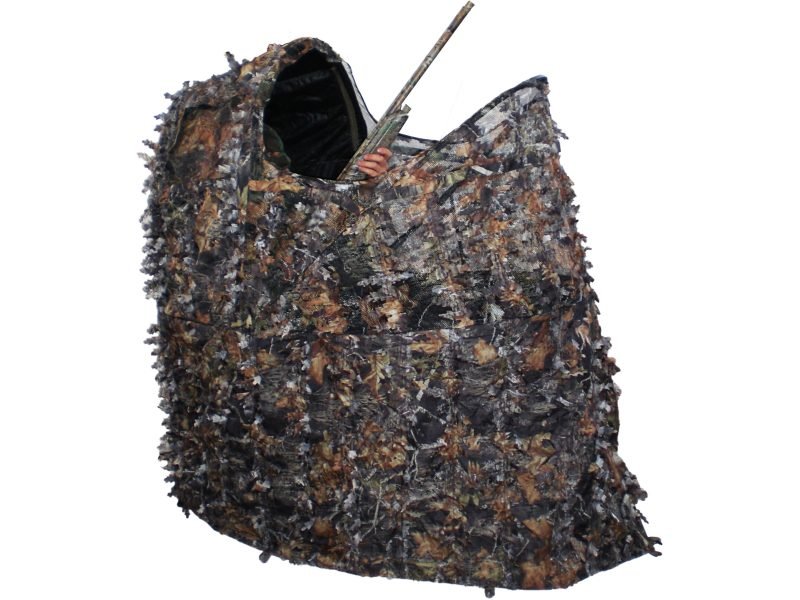
Where cover is thin, such as on open bunds or flooded fields, a portable blind helps a lot. The single-person portable hunting blind STY-109 sets up in about 20 seconds. It has a front zip opening, two side windows and one rear window, and a built-in chair with a cup holder and cartridge holder. It is waterproof and windproof, comes with stakes for windy days, and packs into a shoulder bag. Layout blinds, which you lie down in, suit very open, dry fields.
Concealment tips
- Wear a camo hat and face cover, and cover your hands. Our men's hunting clothing range has camouflage layers to match.
- Keep still until you decide to shoot, then move all at once.
- Hide shiny items like flasks, phones and empty cases.
Staying Dry and Warm
Pre-dawn winter mornings on the water can be properly cold, especially in central and northern Punjab. Wet feet will end your hunt early.
- Waders: Chest waders let you set decoys in deeper water and retrieve birds. For safety, wear a wader belt tightened at the waist.
- Waterproof boots: For shallow margins and muddy bunds, tall rubber boots are lighter and quicker. The Mossy Oak Duck Blind waterproof long boot is made of natural rubber, with an anti-slip sole, a quick-drying antibacterial inner layer, an EVA cushioning layer and a shoulder strap. Its listed comfort range is +5 to +20 degrees, so add warm socks on colder mornings. You'll find more options in our footwear section.
- Layers: Wear a moisture-wicking base layer, an insulating mid layer (fleece or wool) and a windproof, water-resistant camo outer layer. Shed a layer while walking in so you don't sweat.
- Extras: Pack warm gloves, a beanie or camo cap, a dry change of socks in a sealed bag, and a flask of hot chai.
Lights and Optics for Pre-Dawn Setup
You'll walk in, wade and set decoys in the dark, so a good light is a safety item, not a luxury.
- Headlamp: Keeps both hands free; red-light mode protects night vision.
- Handheld torch or searchlight: For finding paths and checking water depth. Browse our search lights for options.
- Binoculars: Compact binoculars help you scout and identify species before you shoot, which matters when you need to avoid protected birds.
Switch lights off once you're set up.
Carrying and Organising Your Gear
- Decoy bag: A slotted, mesh decoy bag lets water drain out and stops decoys rattling.
- Backpack or blind bag: Keep calls, cartridges, licence, torch, first aid and knife in one waterproof bag.
- Lanyard: Hang your calls around your neck so they're always within reach.
- Wind up lines: Wrap each anchor line around its decoy's keel when packing up, so the next setup is tangle-free.
Retrieving Birds
Recover every bird you shoot.
- Mark the spot where each bird falls.
- Retrieve wounded birds first, and quickly. A trained retriever dog is the best conservation tool a duck hunter can have.
- Don't wade beyond a safe depth, especially in cold water or soft mud.
- Count your birds as you collect them, and stop when you reach the bag limit.
Cleaning Up the Site
Leave the marsh cleaner than you found it. Pick up every empty cartridge case, wad, bottle and wrapper. Take home broken decoys and tangled line, which can trap wildlife. Responsible hunters are the reason landowners keep their gates open.
Printable Duck Hunting Checklist
Legal and safety
- Hunting licence or permit, firearm licence and CNIC
- Confirmed open season, permitted day and bag limit
- Landowner permission (private land)
- First aid kit and phone in a waterproof pouch
Decoys and rigging
- Decoys (mallard plus teal, pintail or coot)
- Anchors and spare anchor line
- Jerk string or wind-powered motion decoy
- Slotted decoy bag
Calling and concealment
- Hen mallard call and feeding call
- Teal call and/or drake whistle
- Lanyard
- Portable blind or natural hide material
- Camo hat, face cover and gloves
Clothing and comfort
- Waders or waterproof long boots
- Base, mid and outer layers
- Spare socks in a sealed bag
- Flask, snacks and water
Lights, tools and clean-up
- Headlamp, torch and spare batteries
- Binoculars
- Knife or multi-tool
- Rubbish bag for empty cases and litter
Frequently Asked Questions
Do I need a licence to hunt ducks in Pakistan?
Yes. Waterfowl hunting is regulated by provincial wildlife departments, and you need the licence or permit they require, as well as a licensed firearm. Check requirements with your provincial wildlife department each season.
When is duck season in Pakistan?
Ducks generally arrive with the winter migration. However, each province announces its own open season, permitted hunting days and bag limits, and these can change every year. Always confirm the current notification before you hunt.
How many decoys does a beginner need?
A dozen good mallard decoys, with a few teal or coot mixed in, is plenty for small ponds and walk-in spots. Get placement and wind right before adding more.
Which duck call should I buy first?
Start with an easy-to-blow hen mallard call, then add a teal call or a drake whistle for mixed flocks. Practise at home before the season.
Can I use an electronic duck caller?
Electronic bird and duck callers are banned or restricted in many places, and many hunters see them as unethical because they encourage over-harvesting. Stick to manual calls and check your provincial rules.
Waders or long boots: which is better?
Choose waders if you'll be setting decoys in water deeper than your knees or retrieving birds from open water. Waterproof long boots are lighter and work fine for shallow margins, bunds and flooded fields.
Final Thoughts
Successful duck hunting in Pakistan comes from doing the basics well. Hunt legally, scout, set up with the wind, hide well, call sparingly and recover every bird. If you'd like help choosing decoys, calls or boots, visit the Just Hunters shop in Gulberg, Lahore, or order online with cash on delivery anywhere in Pakistan. For more on the country's hunting traditions, read our article on hunting in Pakistan. Have a safe, ethical season.